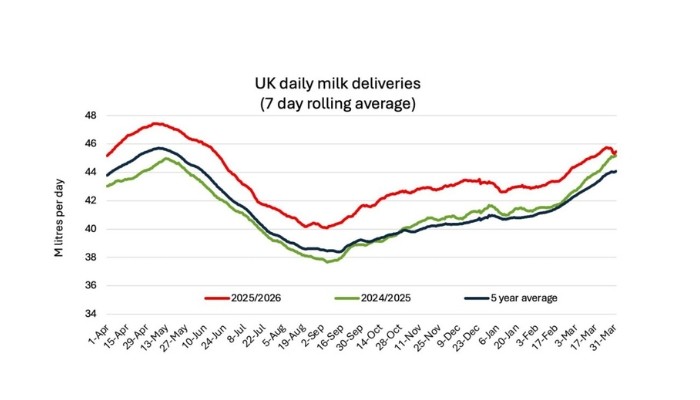
GB milk production for the 2025/26 season is estimated to have reached just over 13 billion litres, up 5% year-on-year. For most of the season, daily production levels have been well above the previous year’s figures, as well as above the 5-year average. This was all in line with AHDB’s forecast for the year.
Earlier in the year, the price paid to farmers for their milk, called the farmgate milk price, was slashed as supply levels were very high. Typically, lower milk prices reduce farmers’ incentives to produce and result in tighter supply. That pattern didn’t appear to emerge this year beyond a small dip in production in January.
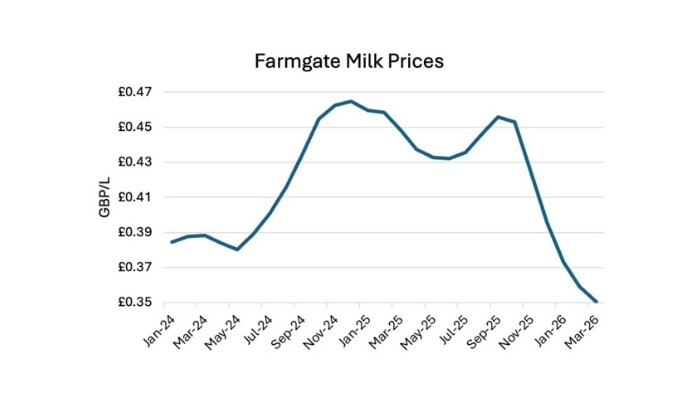
This has left the market with an abundance of cream available. Manufacturers can either turn this into butter or powders, most commonly skimmed milk powder. High levels of supply should lead to lower prices, and to a certain extent we did see this on butter. For powders though, prices have been climbing for months. This is due to a mix of factors, but the two most important are simple demand and supply.
While there are other factors at play, and dairy is a very complex market, these are the types of supply & demand events that have led to the diverging market we’re in now. Strong demand and fixed supply for powders has supported prices in those markets while an abundance of cream that has had to be used had meant an over-supply of butter.
Looking Ahead
Forecasts based on the European Energy Exchange suggest a relatively calm summer, with some upward correction in butter prices in early summer but not reaching quite as high as prices have been in previous years.
On skimmed milk powder there is more risk of a continuing increase in prices, although the market will at some point hit a ceiling. The EEX shows an expectation that prices will cap out in July and slowly decline from there, but this is not a perfect forecast.
Article written by
Senior Commodity Manager - Julia Price
We store cookies, including third-party cookies to monitor site performance and provide you with a more personalised experience. For more information please refer to our cookie policy here.